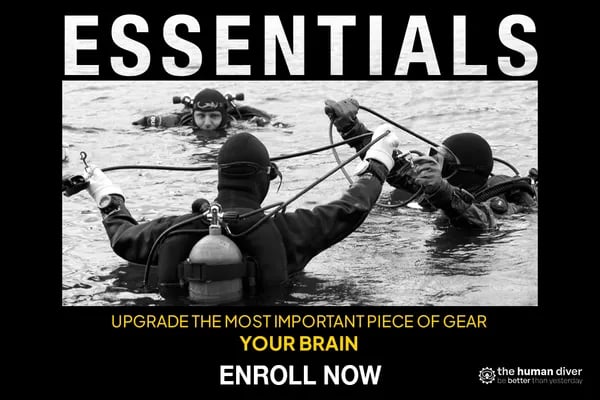



Imagine gearing up for a dive where every decision you make is sharpened by heightened awareness and trusted skills. The Human Diver’s HFiD Essentials course offers precisely that edge, blending deep insights into human factors with practical diving applications. It’s like having an invisible buddy that guides your mind under water, transforming how you approach safety, teamwork, and leadership from novice to expert levels.
Why Human Factors Matter in Diving Safety
Understanding Human Factors in Diving
Human factors in diving refer to the complex interplay between divers, their equipment, the environment, and the procedures they follow. Unlike traditional training, which focuses primarily on technical skills and procedures, human factors training addresses how people think, communicate, make decisions, and interact as a team underwater. The HFiD: Essentials course by The Human Diver is a comprehensive Diving Safety Course that brings these concepts to the forefront, helping divers of all backgrounds—from recreational to technical and cave divers—develop a deeper awareness of the human element in dive safety.
Human Error and Violations: Impact on Dive Safety
Despite rigorous training and planning, human error remains a leading cause of diving incidents. Errors can stem from lapses in attention, miscommunication, or flawed decision-making. The course explores the concept of "violations"—deliberate deviations from accepted practices—and the phenomenon of normalization of deviance, where risky behaviors gradually become routine without notice. These violations, often unintentional, can significantly increase the risk of accidents. By understanding how and why errors and violations occur, divers can better anticipate, prevent, and respond to underwater challenges.
Psychological Safety and Just Culture: Reducing Risks
A critical aspect of Psychological Safety in Diving is fostering an environment where divers feel comfortable voicing concerns, asking questions, and admitting mistakes without fear of blame. This openness is essential for preventing incidents and learning from near-misses. The HFiD: Essentials course emphasizes the importance of a just culture, where the focus is on understanding and improving systems rather than assigning blame. Research shows that teams with high psychological safety experience fewer errors and are more effective at managing risks.
Improving human factors awareness is key to elevating diving safety standards. - Human Diver
Performance Shaping Factors: Influencing Safer Dives
Performance shaping factors are the conditions that influence how divers perform, both individually and as a team. These include stress, fatigue, workload, communication quality, and leadership dynamics. The HFiD: Essentials course dedicates entire modules to these topics, teaching divers to recognize and manage these factors proactively. By understanding what shapes performance, divers can make better decisions, communicate more effectively, and adapt to changing underwater situations.
Comprehensive Training for Real-World Application
The HFiD: Essentials course is structured into 12 modules, each lasting 5–15 minutes, for a total of approximately 3.5–4 hours of learning. Topics include Human Error, Violations, Psychological Safety, Decision Making, Communication, Teamwork, and more. Through real-world case studies and practical exercises, divers learn to analyze incidents non-judgmentally, maximize learning from past experiences, and foster a culture of continuous improvement. This approach goes far beyond standard agency materials, making it a vital resource for anyone committed to safer, more enjoyable diving.
Enhances situational awareness and decision-making
Promotes open communication and team learning
Reduces normalization of deviance and risky behaviors
Links performance shaping factors to improved safety outcomes
Building Non-Technical Skills for Better Dive Outcomes
While technical expertise and physical skills are essential for any diver, research consistently shows that non-technical skills—such as communication, decision making, and leadership/followership—are equally critical for safe and successful dives. The HFiD: Essentials course by The Human Diver places a strong emphasis on these often-overlooked skills, providing divers with practical tools to enhance both individual and team performance underwater.
Core Non-Technical Skills: Communication, Decision Making, Leadership, and Followership
At the heart of the HFiD: Essentials curriculum are modules dedicated to Teamwork and Communication Diving, Diving Decision Making, and Leadership Followership. These modules break down the essential elements of effective underwater collaboration:
Communication: Underwater communication is inherently challenging, yet it is vital for sharing information, clarifying intentions, and managing emergencies. The course teaches divers to use clear signals, maintain eye contact, and confirm understanding, reducing the risk of miscommunication.
Decision Making: Making sound decisions under pressure is a cornerstone of dive safety. HFiD: Essentials explores common cognitive biases, groupthink, and practical frameworks for evaluating options, enabling divers to respond effectively to unexpected situations.
Leadership and Followership: Effective teams require both strong leaders and engaged followers. The course highlights how leadership and followership roles can shift during a dive, fostering adaptability and mutual support within the team.
Addressing Practical Challenges: Underwater Communication Techniques
Real-world diving presents unique communication barriers, from limited visibility to equipment constraints. HFiD: Essentials addresses these challenges by teaching practical underwater communication techniques, such as:
Standardized hand signals and touch contact methods
Pre-dive briefings to align expectations and roles
Post-dive debriefings to review performance and identify improvements
These strategies help divers anticipate issues, coordinate actions, and maintain psychological safety—a key factor in preventing errors and fostering a learning culture.
Case Studies: Learning from Real Incidents
Each module in the course is reinforced with detailed case studies, illustrating how non-technical skills directly impact dive outcomes. For example, one case study examines a team’s response to equipment failure, highlighting how clear communication and decisive leadership prevented escalation. Another explores the normalization of deviance, showing how unchecked shortcuts can lead to incidents over time.
“Effective teamwork underwater is often overlooked but vital for safety and success.” – Human Diver
Benefits for All Divers: From Recreational to Instructor Level
The value of non-technical skills extends across all diver backgrounds. Recreational divers gain confidence in group settings, technical divers improve risk management, and instructors enhance their ability to create safe, supportive learning environments. The course’s concise, 5–15 minute lessons and downloadable resources make it accessible for busy schedules, while lifetime access ensures ongoing development.
By integrating non-technical skills into their practice, divers are better equipped to prevent errors, adapt to challenges, and enjoy safer, more rewarding underwater experiences.
Flexible Learning with Lifetime Access and Bonus Content
The HFiD Essentials course by The Human Diver sets a new standard for Diver Training Online by offering a truly Flexible Dive Course experience. Designed for divers of all backgrounds—whether recreational, technical, or professional—the course is accessible on multiple platforms, including PC, Mac, and iOS, with Android support coming soon. This ensures that divers can learn wherever and whenever it suits them, accommodating busy schedules and diverse learning styles.
Multi-Platform Access and Offline Learning
One of the standout features of HFiD Essentials is its accessibility. All course materials are available through a web browser, and an iOS app is ready for those who prefer mobile learning. Android users can look forward to a dedicated app in the near future. For divers who travel frequently or spend time on liveaboards, the ability to download all video content for offline viewing is invaluable. This means learning can continue even in remote locations or during downtime between dives.
Lifetime Access and Continuous Updates
Unlike traditional training programs, HFiD Essentials provides Lifetime Access Diving to all course materials. Once enrolled, participants can revisit any module or lesson at any time, ensuring that knowledge remains fresh and relevant. The Human Diver is committed to keeping the course up to date, so all participants receive ongoing updates at no additional cost. This approach supports continuous improvement and allows divers to stay current with the latest insights in human factors and diving safety.
“Flexibility in learning is a game-changer for divers wanting to improve on their own pace.” – Human Diver
Rich Bonus Dive Resources
To enhance the core curriculum, HFiD Essentials includes a wealth of Bonus Dive Resources that go far beyond standard training agency materials. These supplementary materials are designed to deepen understanding and support practical application:
Published research papers for evidence-based learning
Infographics that clarify complex topics
Case study PDFs and detailed debriefing guides
eBooks and downloadable resources for further reading
Access to a learning-focused online community for support and discussion
These resources are especially valuable for divers who want to explore topics in greater depth, reflect on real-world scenarios, and connect with others committed to improving diving safety and performance.
Convenient, Self-Paced Structure
The course is organized into 12 concise modules, each broken down into 5–15 minute lessons. With a total duration of 3.5 to 4 hours, divers can progress at their own pace, pausing and resuming as needed. This flexibility is ideal for those balancing diving with work, family, or other commitments.
Affordable Investment with Satisfaction Guarantee
For a one-time fee of $97, divers receive lifetime access, ongoing updates, and a certificate upon completion. The course is backed by a 100% money-back guarantee within one month, making it a risk-free investment in personal and team safety.
Learning from Real-World Case Studies to Enhance Safety
One of the defining strengths of the HFiD: Essentials course is its use of Case Studies in Diving to bridge the gap between theory and real-world application. By analyzing actual incidents, the course makes abstract concepts like Human Factors, Diver Safety, and Error Prevention practical and relatable for divers of all backgrounds. As The Human Diver states,
“Real-world cases make human factors tangible and actionable.”
Detailed Case Studies: Illustrating Errors and Decision Processes
Each module in HFiD: Essentials incorporates carefully selected case studies that highlight common errors, decision-making challenges, and communication breakdowns encountered in diving. These scenarios are drawn from a wide range of environments, including recreational, technical, and cave diving, ensuring broad relevance. By dissecting these incidents, divers gain insight into how seemingly minor factors—such as unclear communication, assumptions, or overlooked details—can escalate into serious safety issues.
Error Identification: Case studies reveal how human error often results from system weaknesses rather than individual negligence.
Decision Making: Real incidents show the impact of stress, time pressure, and group dynamics on diver choices.
Communication: Examples demonstrate how miscommunication or lack of psychological safety can contribute to accidents.
An Emotive Final Case Study: The Power of Reflective Learning
The course culminates in an in-depth, emotive case study that encourages participants to engage in reflective analysis. This approach helps divers move beyond simply identifying what went wrong, prompting them to consider why decisions were made and how similar situations could be handled differently in the future. Reflective learning is proven to reduce repeat errors and foster a mindset of continuous improvement.
By openly discussing mistakes and near-misses, the course supports a culture where divers feel safe to admit errors and learn from them, rather than hiding them out of fear of blame. This aligns with the principles of psychological safety and just culture, both of which are central to effective Diver Safety and Error Prevention.
Promoting Non-Judgmental Analysis and Continuous Improvement
HFiD: Essentials emphasizes that learning from incidents should be non-judgmental and focused on understanding, not assigning blame. Through guided case study analysis, divers are encouraged to:
Ask open-ended questions about decision processes
Identify performance shaping factors, such as fatigue or environmental stressors
Reflect on their own experiences and biases
Share lessons learned with their teams
This approach not only improves individual skills but also strengthens team performance and instructor competency, creating safer and more resilient diving communities.
Applicability Across All Diving Disciplines
The diverse range of case studies ensures that the lessons are relevant for everyone—from recreational open water divers to technical instructors and cave explorers. By exposing participants to a variety of scenarios, the course broadens their ability to recognize and respond to challenges in any diving environment.
Incorporating Case Studies in Diving throughout the HFiD: Essentials course transforms theoretical knowledge into actionable skills, making Human Factors and Diver Safety accessible and impactful for all.
Community, Recognition, and Expanding The Human Diver Ecosystem
The Human Diver stands as an award-winning authority in diving safety education, with its HFiD Essentials course forming the cornerstone of a much broader Diver Training Ecosystem. The program’s impact is not only measured by its comprehensive curriculum but also by the vibrant Diving Community it has fostered, the professional recognition it has received, and the ongoing opportunities it provides for Professional Development Diving.
Recognition of The Human Diver’s commitment to innovation and safety is reflected in several prestigious awards. The organization was honored with the 2018 TekDiveUSA Technical Diving Conference award for innovation and product design, a testament to its role in advancing technical diving safety. Further accolades include the 2022 OzTek award for exceptional contribution to diving development and the 2023 Chartered Institute of Ergonomics Award for Communication. These awards highlight the quality and forward-thinking approach that define The Human Diver’s offerings. As the team notes,
Recognition fuels continuous innovation in diving education.
Beyond accolades, The Human Diver actively expands its reach and influence through a robust affiliate program. This initiative empowers instructors to integrate HFiD Essentials into their own teaching, offering credits and discounts to their students. Such collaboration not only broadens access to high-quality training but also strengthens the bonds within the diving community, encouraging a shared commitment to safety and learning.
The Human Diver’s ecosystem is designed for lifelong learning and continuous improvement. In addition to HFiD Essentials, divers can access a suite of advanced courses and resources, including HFiD Practitioners, Dive Smarter in 30, and HFiD Masterclass, as well as specialized offerings in multiple languages. Merchandise, such as Under Pressure T-shirts and THD Wetnotes, further connects divers to the brand and its mission. This comprehensive approach supports ongoing skill development and reinforces a culture of safety and excellence.
Community engagement is at the heart of The Human Diver’s philosophy. Through active blogs, the THD Podcast (available in multiple languages), the If Only… YouTube Channel, and the annual HFiD Conference, divers are invited to share experiences, reflect on lessons learned, and contribute to a collective knowledge base. This open exchange of ideas and experiences is essential for nurturing psychological safety and a just culture, both of which are central themes in the HFiD Essentials course.
In conclusion, HFiD Essentials is more than a course—it is an entry point into a dynamic, supportive, and continually evolving Diver Training Ecosystem. The Human Diver’s commitment to innovation, community, and professional development ensures that divers of all backgrounds have access to the tools, knowledge, and support they need to elevate their safety and skills. By joining this community, divers not only enhance their own performance but also contribute to the ongoing advancement of diving safety worldwide.