



Save a lot of money on your web hosting fees with a smarter solution. Most users are unknowingly overpaying for bandwidth and storage they'll never fully use, thanks to misleading “unlimited” packages from traditional web hosting companies. This video training reveals how to grow your business with Amazon S3—a reliable, cost-effective service that charges only for what you actually use. Instead of fixed monthly fees for dedicated servers, Amazon S3 offers scalability and flexibility, making it an ideal platform for businesses of all sizes.
In this brand new over-the-shoulder video series, you will learn everything you need to know to get started with Amazon S3. From account setup to organizing your data efficiently, to saving money on bandwidth, this training covers unknown tactics few elite users know. You’ll see step-by-step instructions, no guesswork, just clear guidance. Whether you’re ready to reduce costs or scale your hosting smoothly, this training shows you the way forward.
Did You Know?
Did you know that most web hosting customers pay for bandwidth and storage they never fully use, leading to significant wasted expenses?
Source: Van-Santen-Enterprises.com
The Hidden Costs of Traditional Web Hosting
Many small business owners and website operators believe they are getting value from traditional web hosting plans because of alluring advertisements promoting "unlimited" bandwidth and storage. The truth? These plans often come with policies that limit usage, causing users to unknowingly pay inflated fees for services they barely need. Web hosting companies keep prices stable by offering more space and bandwidth at no apparent extra cost, but the reality is that about 99% of customers only use a fraction of what they're paying for. This creates a hidden cost structure benefiting the hosts, not the customers.
Fixed monthly fees are a major contributor to this waste. Whether you use a little or a lot, the rate stays the same, which means if your usage is low, you're effectively overpaying. Combine that with the fact that many so-called unlimited offers have "fair usage" clauses hidden in the fine print, you can be throttled or charged extra once you cross a low threshold. Additional fees may also appear for bandwidth overages, SSL certificates, backups, or other essential features that seem free at signup.
This results in an ongoing cycle where users get locked into a hosting provider's system. Migration can be technically challenging, so many stick with their current service, paying month after month without reassessing the true value or cost-effectiveness. The hosting companies continuously win because customers rarely realize they are overpaying for underused resources. If you're still paying a fixed monthly fee for shared, VPS, or dedicated hosting without fully utilizing the space or bandwidth, you are likely losing money.
Misleading 'Unlimited' Plans
Most 'unlimited' web hosting plans have restrictive fair usage policies that lead to overbilling.
Fixed Monthly Fees
Paying a flat rate regardless of actual resource usage results in wasted money.
Hidden Charges
Additional fees for bandwidth, backups, or SSL certificates are often not transparent.
Lock-In Effect
Migrating away from a host can be difficult, causing ongoing unnecessary expenses.
Low Resource Utilization
Hosted resources are rarely fully used, meaning you pay for unused capacity.
Examining popular hosting options reveals how costs accumulate. Bluehost’s Shared Hosting plan offers a base monthly price of $12.99 with unmetered bandwidth marked by fair usage limits, and “unlimited” storage that typically comes with restrictions. HostGator’s Dedicated Server pricing jumps significantly to $89.99 monthly, also with unmetered but restricted bandwidth and unlimited storage with caveats. Both services require contract commitments that can trap customers for a year or more.
By contrast, Amazon S3 uses a pay-as-you-go pricing model with no fixed monthly fee, averaging around $6.75 per month for typical usage. Data storage and bandwidth are measured precisely, so you only pay for what you actually use—no wasted capacity or unnecessary fees and no binding contracts.
| Feature | Bluehost Shared Hosting | HostGator Dedicated Server | Amazon S3 Cloud Storage |
|---|---|---|---|
| Monthly Base Price | $12.99 | $89.99 | Pay-as-you-go, average $6.75 |
| Bandwidth Limits | Unmetered (with fair usage) | Unmetered (with fair usage) | Measured & billed per usage |
| Storage Space | Unlimited (with restrictions) | Unlimited (with restrictions) | Scalable, pay only for used |
| Setup Fees | None | None | None |
| Contract Lock-in | Yes, usually 12+ months | Yes, often yearly contract | No contract, flexible usage |
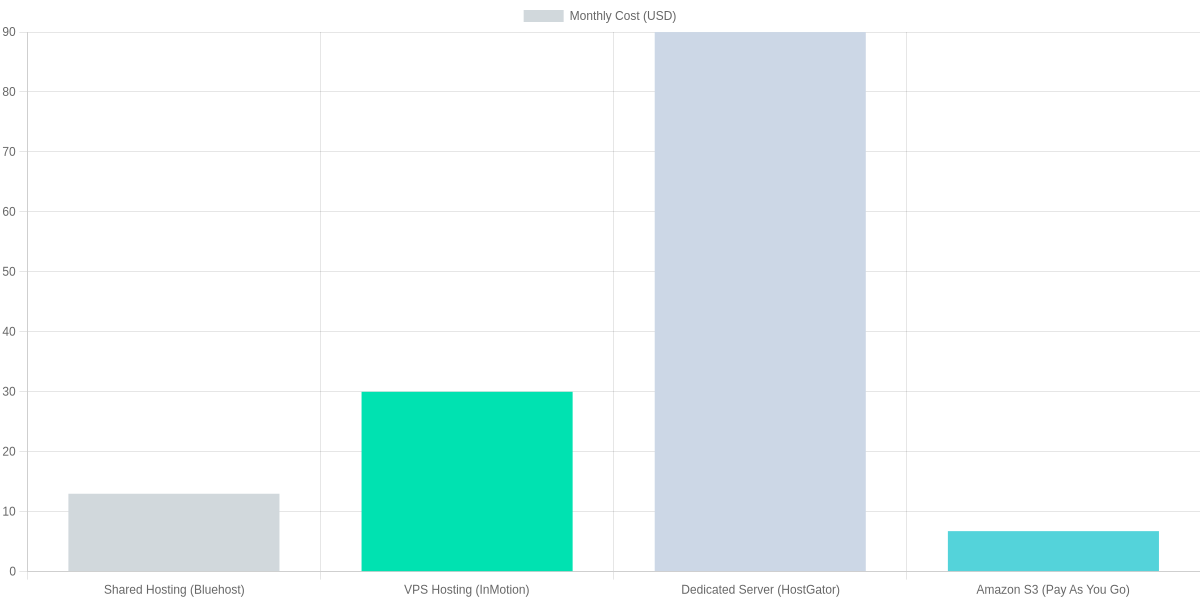
Choosing a more flexible, usage-based web hosting system like Amazon S3 can cut down your hosting fees drastically, while providing scalability and freedom from restrictive contracts. Many web hosts include hidden profit margins within their pricing models that Amazon S3’s transparent pay-as-you-go structure exposes starkly. Understanding these hidden costs helps business owners make better decisions about their web hosting strategies to maximize savings and efficiency.
What is Amazon S3?
Amazon Simple Storage Service, or Amazon S3, is a cloud-based storage service designed to offer businesses highly scalable, secure, and flexible data storage. It eliminates the limitations and high costs associated with traditional web hosting by providing a pay-as-you-go model, allowing companies to only pay for the storage and bandwidth they actually use.
Amazon S3 works by storing data objects in "buckets," which can be accessed and managed via a web interface or API. This makes it an ideal solution for businesses looking to host websites, back up data, or distribute content with minimal overhead. The service automatically handles data replication and ensures durability, protecting your information from loss.
One of the most significant benefits of Amazon S3 is its elasticity. Whether you need to store a few gigabytes or multiple terabytes, S3 scales effortlessly without interrupting access or performance. This flexibility is a game-changer for businesses growing their online presence or managing fluctuating workloads.
Security is another key aspect—Amazon S3 includes robust security features such as encryption and fine-grained access controls to keep your data safe. It integrates seamlessly with other AWS services, making it easy to incorporate into your existing technology stack.
By switching to Amazon S3, many businesses reduce their reliance on costly dedicated servers and avoid being locked into inflexible hosting contracts. This freedom enables substantial cost savings and greater control over how and when data is stored and accessed. For companies ready to grow efficiently, Amazon S3 offers a reliable, scalable platform to meet modern storage demands.
Amazon S3: Scalable Cloud Storage
Amazon Simple Storage Service (S3) is a cloud storage solution designed for scalability, security, and flexibility. It helps businesses efficiently store, manage, and retrieve data without the constraints of traditional hosting.
- ✓ Secure, durable cloud storage
- ✓ Pay-as-you-go pricing
- ✓ Scalable for any business size
- ✓ Easy integration with apps and websites
Getting Started with Amazon S3
Amazon S3 offers an unbeatable combination of reliability, scalability, and cost-efficiency for businesses looking to manage their data storage smartly. Getting started with Amazon S3 involves a straightforward process that enables business owners and developers to leverage its powerful cloud storage capabilities quickly.
Your journey begins by creating an AWS account—this is your gateway to accessing all AWS services, including Amazon S3. Head to the official AWS website and complete the registration by providing your email and billing details. New users often benefit from the AWS Free Tier, which gives limited free usage for 12 months to explore services including S3.
Once registered, sign in to the AWS Management Console. This is the user interface where you control all your cloud resources. Using your credentials, log in at console.aws.amazon.com. The dashboard provides access to various services, but for storage, locate and click the “S3” option under the “Storage” category.
After accessing Amazon S3, the next step is to create your very first bucket. Buckets are the foundational container objects in S3 where your data lives. When creating a bucket, you must pick a globally unique name and select an AWS region closest to your primary users or business location to reduce latency. The Create Bucket wizard also lets you configure options such as versioning (to keep multiple versions of an object), encryption, and access permissions, vital for maintaining security and compliance.
Uploading files to your bucket is simple and flexible. You can add individual files or entire folders through the S3 console’s upload interface. For businesses requiring frequent uploads, automation tools and APIs are available to streamline this process. Managing large volumes of data remains hassle-free as Amazon S3 handles scaling and storage availability on your behalf.
Security is a top priority. Amazon S3 offers granular control over permissions. You control who can access your buckets and objects by setting policies and permissions. Access can be restricted to specific users or roles using AWS Identity and Access Management (IAM), or even configured for public access if necessary. Familiarizing yourself with these controls prevents unauthorized data exposure.
Finally, regular monitoring and management of your buckets ensure efficient operation and cost control. The Management Console dashboard helps you view your bucket storage utilization and request metrics. You can also set lifecycle rules to automatically archive or delete objects based on specified criteria, optimizing your storage costs without manual intervention.
Create an AWS Account
Sign up at the official AWS website to access Amazon S3 services.
Log in to AWS Management Console
Use your credentials to access the console where you can manage S3 and other services.
Navigate to Amazon S3
Find Amazon S3 under the 'Storage' section in the console to start managing buckets.
Create Your First Bucket
Choose a unique name and region, configure settings like versioning and access control.
Upload Files to Your Bucket
Add files or folders to your bucket manually or configure automated uploads.
Set Permissions and Policies
Manage bucket policies and permissions for secure access control to your data.
Monitor and Manage Your Buckets
Use the console dashboard to track usage, configure lifecycle policies, and optimize storage.
Cost-Effectiveness of Amazon S3
Amazon S3 offers a highly cost-effective cloud storage solution by using a pay-for-use pricing model. Unlike traditional web hosting services that charge a fixed monthly fee regardless of usage, Amazon S3 bills you only for the storage space and bandwidth you actually consume. This means businesses can avoid overpaying for unused capacity that often happens with unlimited hosting plans.
Conventional web hosting companies like Bluehost generally charge around $8.99 per month with throttled bandwidth after a certain data threshold. In contrast, Amazon S3 pricing starts at $0 with charges around $0.09 per GB of bandwidth, making it far more scalable and affordable, especially for fluctuating traffic.
One way to save even more on costs is by analyzing your usage patterns to understand your bandwidth and storage needs better. Businesses can use Amazon S3 lifecycle policies to automatically move infrequently accessed data to cheaper storage tiers. Moreover, optimizing data transfer minimizes unnecessary bandwidth fees.
When compared side-by-side with similar services such as Google Cloud Storage, Amazon S3 often comes out ahead on pricing by offering the flexibility of automatic scalability without upfront costs and competitive bandwidth rates. Both Amazon S3 and Google Cloud offer data durability of 99.999999999%, whereas traditional hosting providers vary based on their infrastructure.
Key Steps to Maximize Cost-Effectiveness with Amazon S3
-
1
Analyze Usage Patterns: Identify bandwidth and storage needs to optimize cost.
-
2
Leverage Pay-for-Use: Only pay for storage and bandwidth you actually use.
-
3
Use Lifecycle Policies: Automatically move data to cheaper storage tiers when applicable.
-
4
Optimize Data Transfer: Minimize unnecessary data transfer to save on bandwidth fees.
| Feature | Amazon S3 | Bluehost Shared Hosting | Google Cloud Storage |
|---|---|---|---|
| Pricing Model | Pay-for-use (storage + bandwidth) | Fixed monthly fee | Pay-for-use (storage + bandwidth) |
| Monthly Starting Cost | $0 (pay per GB) | $8.99/month | $0 (pay per GB) |
| Bandwidth Charges | $0.09 per GB | Unlimited but throttled after threshold | $0.12 per GB |
| Scalability | Automatic, no upfront cost | Limited by plan | Automatic, no upfront cost |
| Data Durability | 99.999999999% | Depends on provider | 99.999999999% |

As shown in the chart, Amazon S3’s cost-effectiveness has steadily improved from 2022 through 2025 as adoption increases and pricing competition intensifies. This trend reflects how businesses benefit from the granular control over storage and bandwidth expenses compared to traditional hosting services with fixed costs.
Common Mistakes to Avoid with Amazon S3
Many Amazon S3 users unknowingly fall into common pitfalls that inflate their costs and create management headaches. One frequent error is ignoring the platform’s tiered storage options, leading to overspending on frequently accessed data that could be stored more economically. Additionally, neglecting to set lifecycle policies results in outdated or unused data lingering in costly storage classes instead of being archived or deleted automatically.
Security misconfigurations also pose a serious risk. Improperly configured access controls can expose data to unauthorized users or cause operational disruptions, jeopardizing business integrity. Users often overlook strict bucket policies and IAM (Identity and Access Management) roles, which are essential to safeguarding sensitive files stored in S3.
To maximize cost savings and streamline operations, leveraging Amazon S3 Intelligent-Tiering is highly effective. This feature automatically moves objects between access tiers based on changing access patterns, optimizing storage costs without manual intervention. Coupling this with lifecycle policies ensures data is archived or removed at appropriate intervals, further curbing unnecessary expenses.
Finally, enforcing robust access policies with bucket policies and IAM roles restricts permissions to only those who truly need it, reducing security risks. Mastering these strategies allows businesses to harness Amazon S3's full potential—achieving both cost efficiency and secure, streamlined content management.
Common Mistakes with Amazon S3
Many users fall into typical traps that inflate costs and complicate management.
- • Ignoring tiered storage options and overpaying for frequent access
- • Not setting lifecycle policies to automate data archiving or deletion
- • Failing to properly configure access controls, risking data breaches
Effective Strategies for Amazon S3
Maximize savings and performance with these best practices.
- • Use S3 Intelligent-Tiering to automatically optimize storage costs
- • Apply lifecycle policies to archive or delete outdated content
- • Implement strict bucket policies and IAM roles for secure access control
Frequently Asked Questions
Amazon S3 offers an efficient solution for hosting websites by storing static content such as images, videos, and downloadable files. This eliminates reliance on traditional web hosting and cuts costs significantly, making it ideal for business growth.
The platform supports a vast range of content types, including not only website files but multimedia assets like videos and images, backups, and large data sets. This flexibility allows businesses to securely store diverse digital content with ease.
Cost management is crucial when using Amazon S3. Effective strategies include monitoring your storage and bandwidth regularly, using Amazon’s pricing calculator to forecast expenses, and optimizing costs by leveraging Amazon’s tiered storage classes. Additionally, removing unused files helps keep monthly charges low and predictable.
Can I use Amazon S3 for my website? ▼
What kind of content can I store on Amazon S3? ▼
How do I manage costs effectively when using Amazon S3? ▼
Conclusion
The Amazon S3 service stands out as a reliable, cost-effective solution that can transform how you handle webhosting and content storage. Unlike traditional providers that trap you into fixed monthly fees and overcharge for unused bandwidth, Amazon S3 only charges for what you use. This flexibility can save your business a lot of money.
The brand new over-the-shoulder video series shows you exactly how to leverage Amazon S3 without the usual complexity. For just $27, you gain step-by-step training packed with lesser-known tactics that help you get started right away, optimize costs, and scale efficiently.
Webhosting companies win all the time, but with this training, you finally get a reliable alternative that empowers your growth. There's no risk—click the button below and get instant access to unlock the full potential of Amazon S3 today.
🎯 Key Takeaways for Growing Your Business with Amazon S3
- → Amazon S3 offers a cost-effective, scalable solution for business webhosting and storage.
- → Traditional webhosting often results in overpayment and limited flexibility; Amazon S3 solves these issues.
- → The video training provides a step-by-step, over-the-shoulder guide to maximize Amazon S3 usage and save money.
- → Investing $27 in the training unlocks expert tactics and confidence to switch hosting approaches without risk.
- → Using Amazon S3 can break the cycle of stuck customers paying for unused resources, empowering business growth.